A project by Matthew Freeman

Future Space Habitats

A Global Comparison: Volume · Crew · Power · Recovery

v2.1 · October 2026Data as of October 2026

14habitats compared
12in-depth profiles
4metrics: volume, crew, power, water
41public sources cited

Global comparison

14 habitats, one standard format

Sort any column or filter by orbit and program status. Where a public figure doesn't exist yet, the table says so with TBD rather than guessing. Select a name to jump to its profile.

Location
Status
Orbital ReefBlue Origin & Sierra Space10LEO~550 m³~36 kW cont.TBD2027+
Haven-1Vast4LEO45 m³0.8 kW cont.Open-loop2027
Haven-2Vast12LEO510 m³40 kW avg.TBD2028
StarlabStarlab Space4LEO~400 m³12 kW nom.>90%2028
Axiom StationAxiom Space8LEO~150 m³~42 kW cont.TBD2027+
ThunderbirdMax Space4LEO~350 m³TBDTBD2029
BASISRO3–4LEOTBDTBDTBD2028
ROSRoscosmosUncrewedLEOTBDTBDTBD2028
GatewayNASA4NRHO35 m³≥4 kW cont.98%Closeout
HLSSpaceX / NASA2–4LunarTBDTBDTBDTBD
FoundationNASA2–4Lunar127 m³Grid-connectedTBDEarly 2030s
Lunar CruiserJAXA / Toyota2Lunar~9 m³10 kW stat.Open-loop2029+
ISSMultinational partnership7LEO388 m³30 kW cont.98%Active
TiangongChina3LEO~110 m³~27 kW cont.>90%Active

No habitats match those filters.

14 of 14 habitats shownISS and Tiangong are operating baselines and have no profile. ~ approximate · TBD to be determined · cont. continuous · nom. nominal

What the data shows

Three patterns worth noticing

Standardizing the numbers makes the gaps visible. Each chart below is drawn from the comparison table above.

Living room per person varies 22-fold across the field

Starlab (100) and Thunderbird (88) plan more room per person than the ISS (55 m³); Orbital Reef roughly matches it, and the other 6 sit below it.

Low Earth orbitLunar orbitLunar surface
Starlab100 m³
Thunderbird88 m³
ISS55 m³
Orbital Reef55 m³
Haven-242 m³
Tiangong37 m³
Foundation32 m³
Axiom Station19 m³
Haven-111 m³
Gateway8.8 m³
Lunar Cruiser4.5 m³
0255075100
ISS 55

Habitable volume (m³) divided by the highest crew count listed. Foundation and HLS use their 4-person case; Starlab uses its continuous crew of 4. Habitable volume is defined differently across programs, so read this as a guide, not a ranking.

Only 2 of 12 planned habitats publish a water recovery figure

Starlab (>90%) and Gateway (98% target) state one. 2 are open-loop by design and 8 are still TBD. For reference, ISS (98%) and Tiangong (>90%) on the operating stations.

Figure stated · 2

Starlab >90%Gateway 98%

Open-loop · 2

Haven-1Lunar Cruiser

TBD · 8

Orbital ReefHaven-2Axiom StationThunderbirdBASROSHLSFoundation

9 habitats target a debut between 2027 and 2029

Target years as listed in the comparison. The wave is crowded: several programs would be competing for the same launch, integration, and crew-transport capacity.

Low Earth orbitLunar orbitLunar surface

20273

  • Orbital Reef
  • Haven-1
  • Axiom Station

20284

  • Haven-2
  • Starlab
  • BAS
  • ROS

20292

  • Thunderbird
  • Lunar Cruiser

Early 2030s1

  • Foundation

TBD1

  • HLS

Planned habitats only. Gateway is in closeout and ISS and Tiangong are already operating, so they are not shown.

Habitat profiles

12 profiles, each in the same format

Every profile reports the same six figures so habitats can be read side by side: pressurized and habitable volume, generated and available power, and water recovery and allowance. Superscripts link to the reference list.

Earth orbit

Commercial and national stations in low Earth orbit.

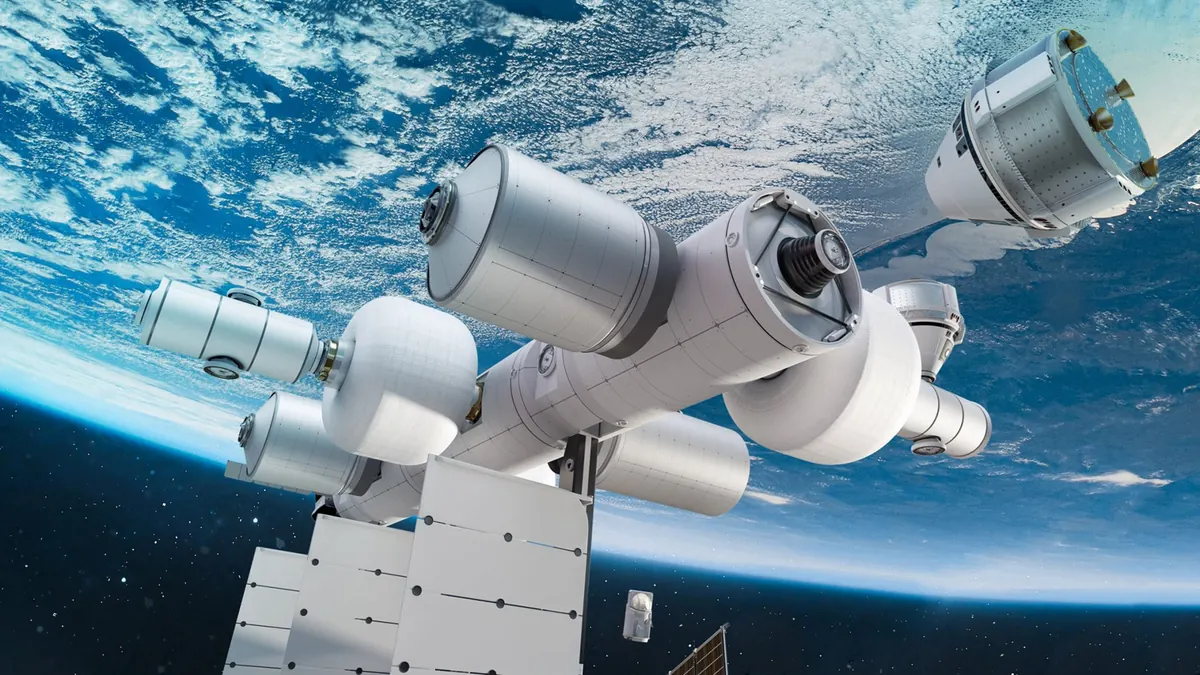
Orbital Reef: low earth orbit concept image
Image courtesy of Blue Origin.

Blue Origin & Sierra Space

Orbital Reef

Low Earth orbitSystem Design Review Completion5

Modular, commercial LEO station featuring inflatable LIFE® habitats. Target launch is no earlier than 2027 on Blue Origin New Glenn. Inclination 51.6°.

Pressurized~830 m³11
Habitable~550 m³11
Generated~100 kWe11
Available~36 kW cont.11
Recovery rateTBD
Allowance2.5 L reqt.12
Focus
Scalable, mixed-use “business park” utilizing LIFE® technology to provide pressurized volume for industrial and commercial services.
Crew
Supports up to 10 crew.
Support systems
Multiple docking ports, research labs, robotics, manufacturing facilities, tourism support, and Astro Garden bioregenerative life support.
Source notes
  • Available power. The source describes 36 kW of heat rejection supporting the internal payload system.

Sources · 5 Exterra Journal of Space Commerce, 2026 · 11 Mosher & Kelsey, 2024 · 12 NASA OCHMO, 2023
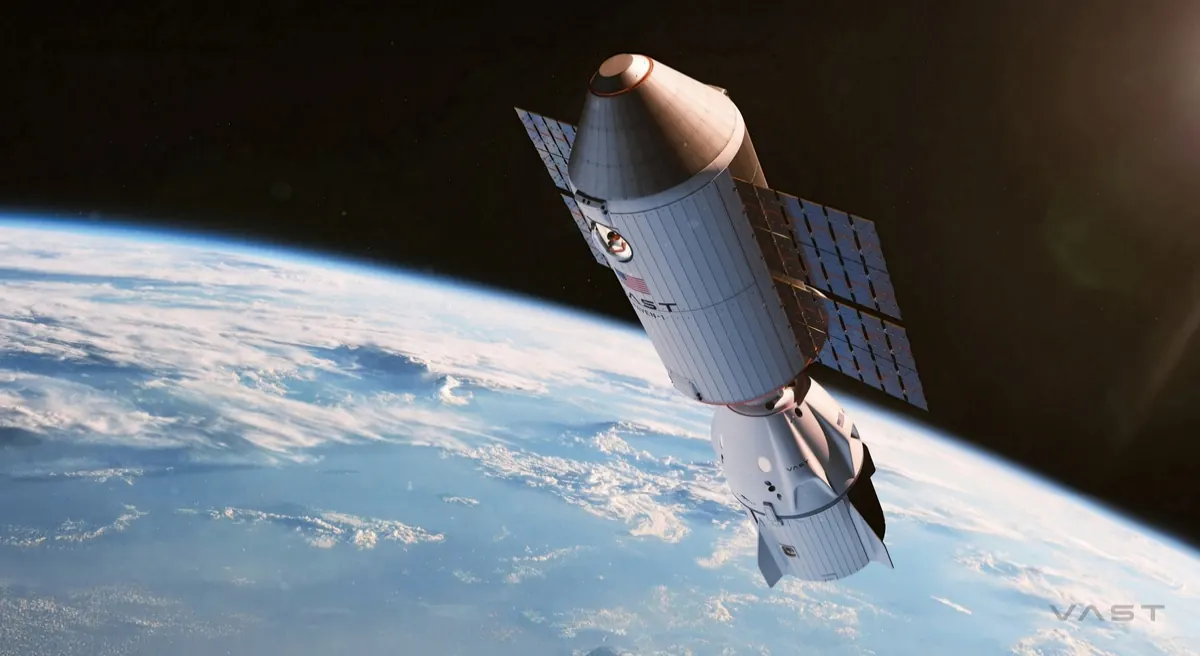
Haven-1: low earth orbit concept image
Image courtesy of Vast.

Vast

Haven-1

Low Earth orbitAssembly, Integration, and Testing35

Compact single-module commercial LEO station. Target launch is 2027 on SpaceX Falcon 9. Inclination 51.6°.

Pressurized80 m³34
Habitable45 m³34
Generated13.2 kWp36
Available800 W (total util.)37
Recovery rateOpen-loop
AllowanceTBD
Focus
Human-centric design for research, manufacturing, and short stays, with uncrewed 1/6g experiments. It relies on Crew Dragon for transport and life support.
Crew
Supports 4 crew for short missions, nominal 14 days.
Crew amenities
Personal quarters, large domed Earth-view window, communal area, and Starlink communications.
Source notes
  • Available power. The Haven-1 Lab lists eight payload slots at 100 W continuous each.

Sources · 34 Vast Space, n.d.-d · 35 Vast, 2026 · 36 Vast, n.d.-a · 37 Vast, n.d.-b

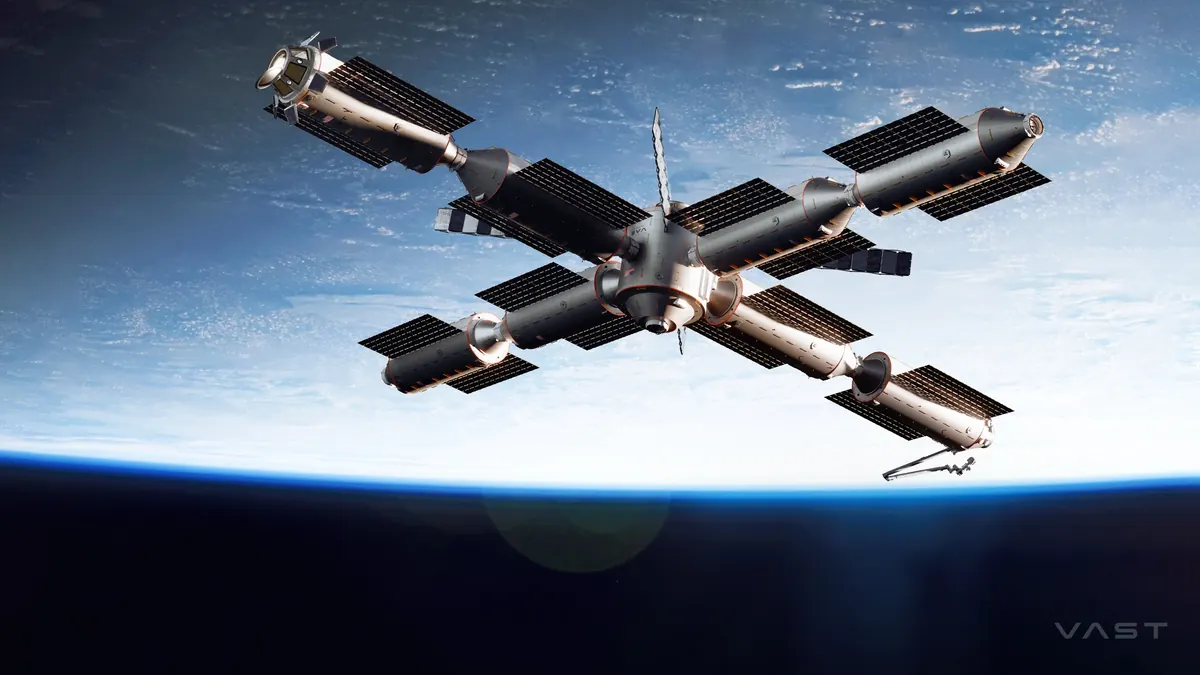
Haven-2: low earth orbit concept image
Image courtesy of Vast.

Vast

Haven-2

Low Earth orbitPhase A: Concept and Technology Development6,21

Modular successor to Haven-1. Initial module launch is targeted for 2028 on SpaceX Falcon Heavy. Inclination 51.6°.

Pressurized1,160 m³33
Habitable510 m³33
Generated86 kW nom.33
Available40 kW avg.33
Recovery rateTBD6
Allowance2.5 L reqt.12
Focus
A fully independent microgravity laboratory designed to provide continuous human presence in LEO.
Crew
Supports a long-duration crew of 12 in its final configuration.
Growth path
Expands incrementally through 2032, eventually forming a “plus sign” configuration with advanced life support and robotic servicing.
Source notes
  • Water recovery. Vast plans to upgrade the initial open-loop life support to a closed-loop system by the time the fourth module is in place.

Sources · 6 Foust, 2024 · 12 NASA OCHMO, 2023 · 21 NASA, 2026 · 33 Vast Space, n.d.-c

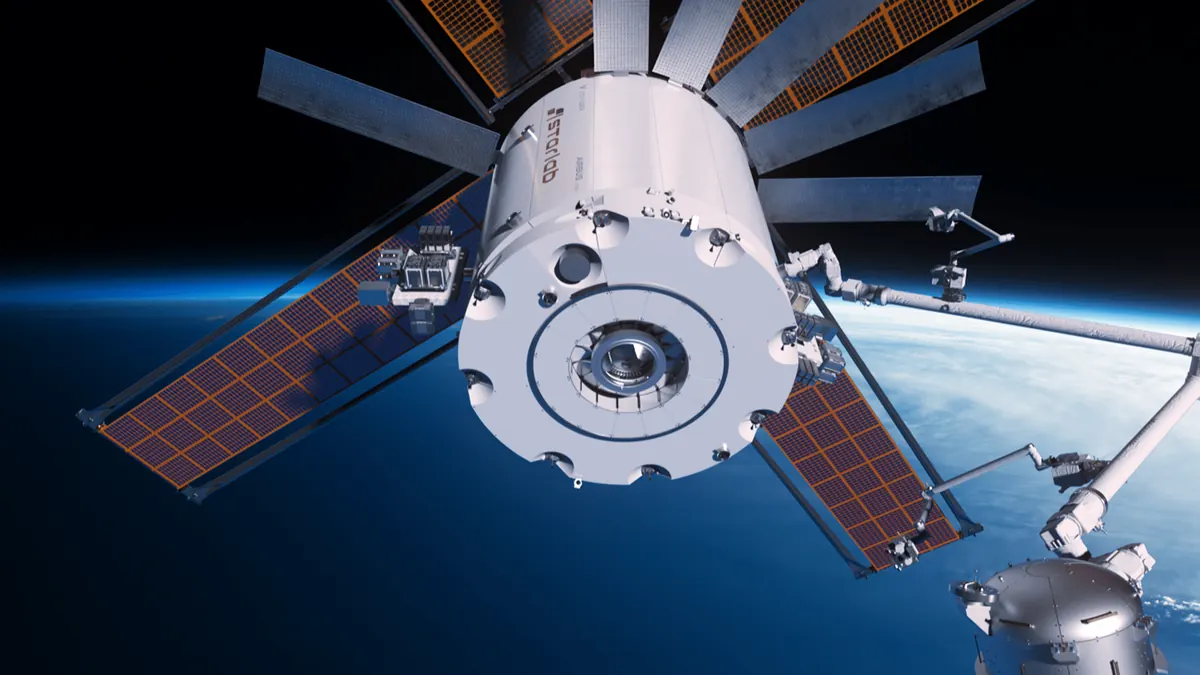
Starlab Station: low earth orbit concept image
Image courtesy of Starlab Space.

Starlab Space

Starlab Station

Low Earth orbitManufacturing and Systems Integration29

Large single-launch commercial LEO station. Target launch is 2028 on SpaceX Starship. Inclination 45°.

Pressurized>400 m³28
Habitable~400 m³28
Generated60 kW8
Available12 kW nom.28
Recovery rate>90%30
Allowance2.5 L reqt.12
Focus
High-volume research and pharmaceuticals powered by the George Washington Carver Science Park, the first commercial science park in space.
Crew
Continuous 4 crew and up to 8 short-term.
Advanced systems
Robotic arm, external payload platforms, advanced labs, and a Palantir-powered digital twin for real-time anomaly detection, predictive maintenance, and optimized resource allocation.
Source notes
  • Available power. The handbook gives 12 kW as the nominal power budget for the internal payload laboratory.
  • Water recovery. Program mandate: at least 90% of wastewater recovered.

Sources · 8 Kehr, 2024 · 12 NASA OCHMO, 2023 · 28 Starlab Space LLC, n.d. · 29 Starlab Space, 2026 · 30 Starlab Space, n.d.

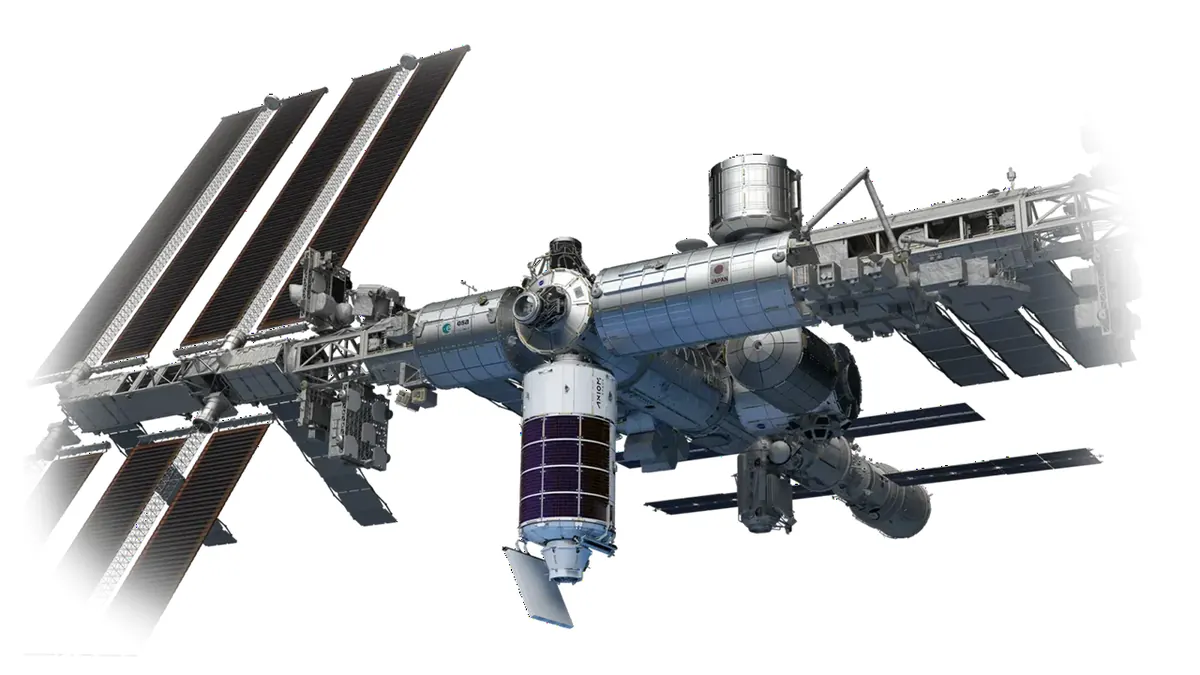
Axiom Station: low earth orbit concept image
Image courtesy of Axiom Space.

Axiom Space

Axiom Station

Low Earth orbitFinal Assembly and Integration2

Modular commercial LEO station. Target launch is no earlier than 2027. Inclination 51.6°.

Pressurized~280 m³3
Habitable~150 m³3
Generated~75–90 kW avg.18,25
Available~42 kW cont.18,24,25
Recovery rateTBD
Allowance2.5 L reqt.12
Focus
Supports research, in-orbit manufacturing, and tourism. Starts docked to ISS before becoming independent.
Crew
Supports up to 8 crew (4 with Hab-1, expanding to 8 when Hab-2 is added).
Modules
Multiple attachable modules including Hab-1/2, airlock with AxEMU suits, power/thermal, and research/manufacturing.
Source notes
  • Generated power. The power module is described as providing operating power equivalent to that available on the ISS.
  • Available power. Roman (2023): 42 kW of power for 15 ISPRs, LSG, MSG, CIR, FIR, and MSRR.

Sources · 2 Axiom Space, n.d. · 3 Dittmar et al., 2021 · 12 NASA OCHMO, 2023 · 18 NASA, 2024 · 24 Roman, 2023 · 25 satsearch, 2025

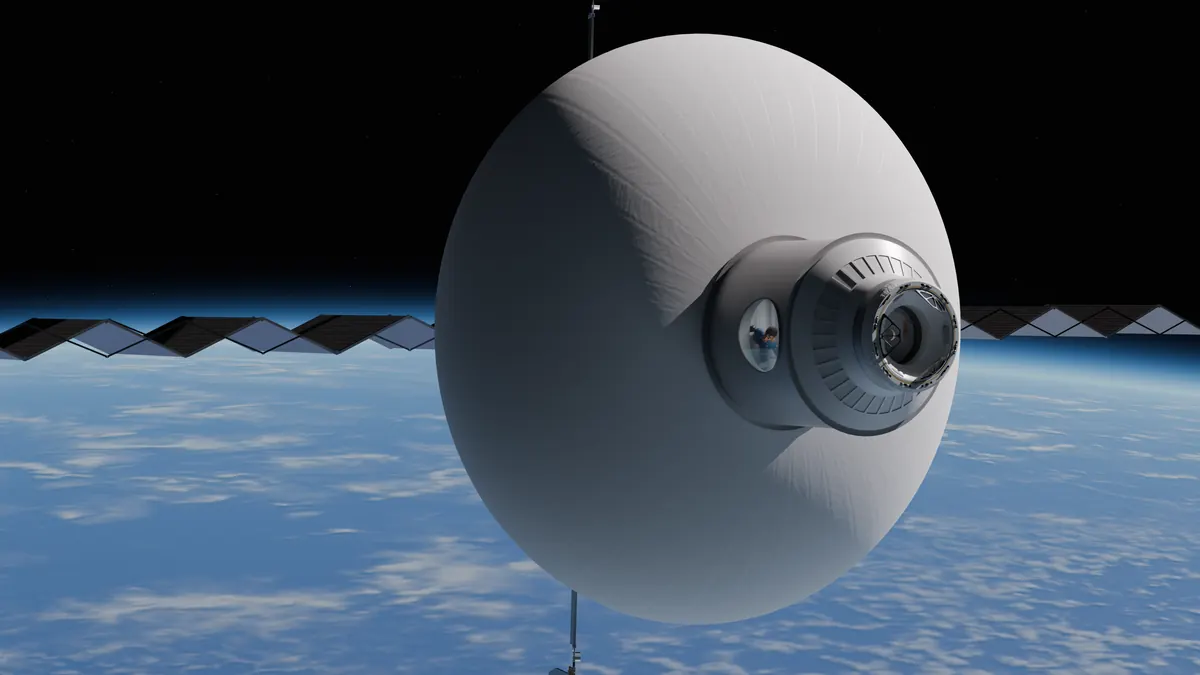
Thunderbird Station: low earth orbit concept image
Image courtesy of Max Space.

Max Space

Thunderbird Station

Low Earth orbitPre-Phase A: Concept Studies (equiv.)23

Single-launch expandable commercial station. Target launch is 2029 on a SpaceX Falcon 9. Inclination unknown.

Pressurized350 m³10
Habitable~350 m³10
GeneratedTBD
AvailableTBD
Recovery rateTBD
AllowanceTBD
Focus
Unique inflatable habitat technology that expands up to 20 times its stowed launch size. It features an adaptable “morphic interior structure” with soft, flexible layouts that can be reconfigured mid-mission.
Crew
Supports a continuous crew of 4.
Support systems
Outfitted with 2 docking ports for visiting vehicles, debris protection systems, and payload capacity hosting over 60 reconfigurable slots.

Sources · 10 Max Space, 2025 · 23 Rabie, 2025

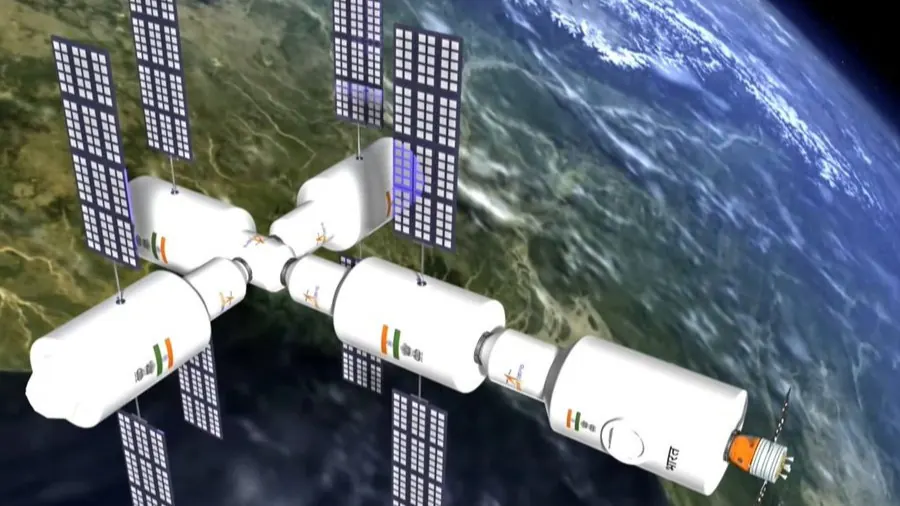
Bharatiya Antariksh Station: low earth orbit concept image
Image courtesy of ISRO.

ISRO

Bharatiya Antariksh Station

Low Earth orbitPhase C: Final Design and Fabrication (equiv.)22

Modular ISRO-led LEO station. Targeted for launch in 2028 on LVM3, with full assembly targeted for 2035. Inclination 51.6°.

PressurizedTBD
HabitableTBD
GeneratedTBD
AvailableTBD
Recovery rateTBD
AllowanceTBD
Focus
Multi-module station for long-duration human spaceflight, microgravity research, and technology demonstration. Built on Gaganyaan program technologies with docking systems and radiation protection.
Crew
Continuous crew of 3–4.
Modules
Features include Bharat Docking System, airlocks for EVA, and MMOD protection.

Sources · 22 Press Information Bureau, 2026

Russian Orbital Station: low earth orbit concept image
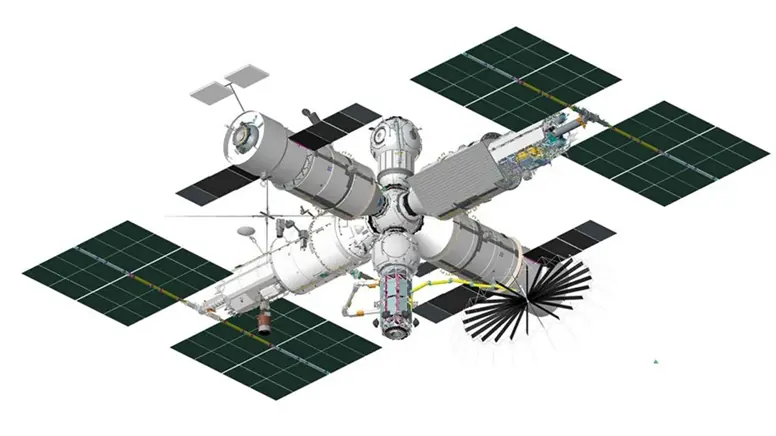
Image courtesy of Roscosmos via Space.com.

Roscosmos

Russian Orbital Station

Low Earth orbitPhase B: Preliminary Design and Technology Completion (equiv.)41

Modular space station developed by Roscosmos as a successor to the ISS. Target launch window beginning in 2028 via Angara-A5. Inclination 51.6°.

Pressurized387 m³9
HabitableTBD
Generated54 kWp9
AvailableTBD
Recovery rateTBD
AllowanceTBD
Focus
A fully autonomous, modular national outpost for material science, military-applied research, and deep-space physiological testing.
Crew
Primarily uncrewed and autonomous.
Modules
The station expands incrementally. It features the core Science and Power Module (NEM-ROS), a Universal Node Module, and a Gateway/Airlock Module (SM) for spacewalks.
Source notes
  • Pressurized. Described as an interim pressurized volume.

Sources · 9 Luzin, 2024 · 41 Zak, 2026

Lunar orbit

A staging outpost in near rectilinear halo orbit.

Gateway: lunar orbit (nrho) concept image
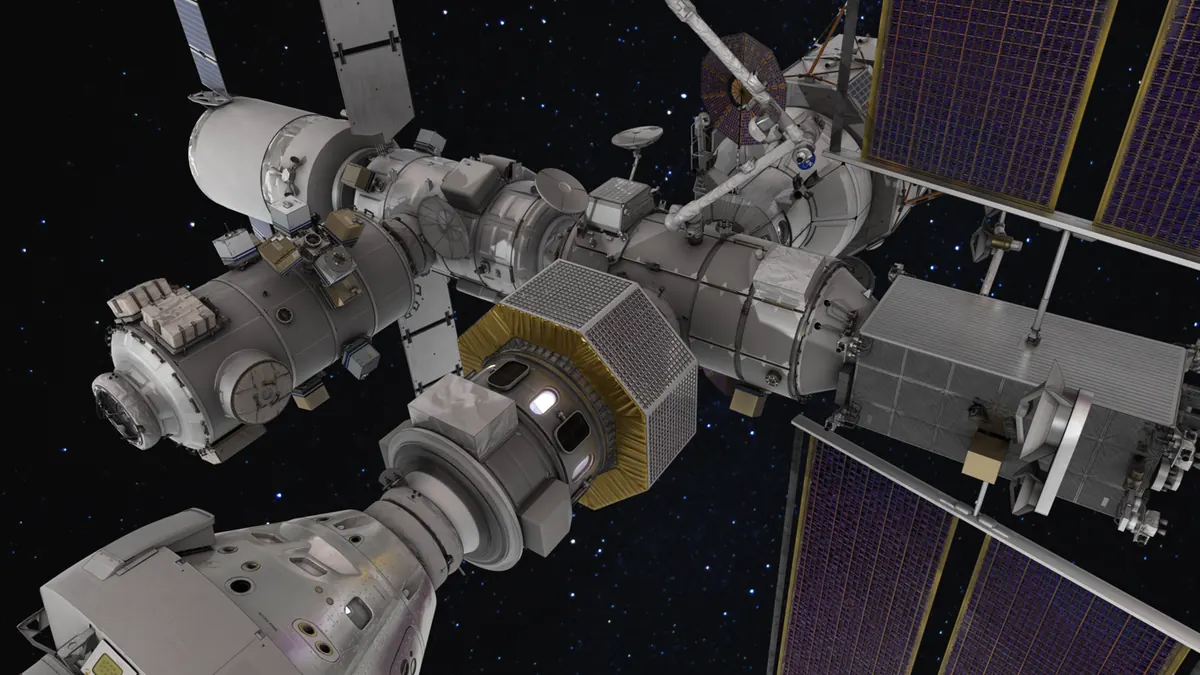
Image courtesy of NASA.

NASA

Gateway

Lunar orbit (NRHO)Phase F: Closeout38

Planned international lunar orbital station and staging point for deep space missions. Development has transitioned into Phase F: Closeout to prioritize a permanent lunar surface base. Near rectilinear halo orbit.

Pressurized125 m³15
Habitable35 m³15
Generated60 kWp15
Available≥4 kW cont.14
Recovery rateTarget 98%17
Allowance2.5 L reqt.12
Focus
Staging hub for lunar landings and a lab for deep space radiation and health research.
Crew
Supports 4 crew for 30–90-day missions.
Modules
Includes PPE (solar propulsion), HALO (initial hub), I-Hab (living quarters), and Canadarm3 robotics.
Source notes
  • Habitable. The source gives the HALO module as about 35.5 m³.
  • Available power. A minimum of 4 kW is reserved for utilization.

Sources · 12 NASA OCHMO, 2023 · 14 NASA, 2018 · 15 NASA, 2022 · 17 NASA, 2023b · 38 Wall, 2026

Lunar surface

Landers, fixed habitats, and pressurized rovers for the Moon.

Human Landing System: lunar surface concept image
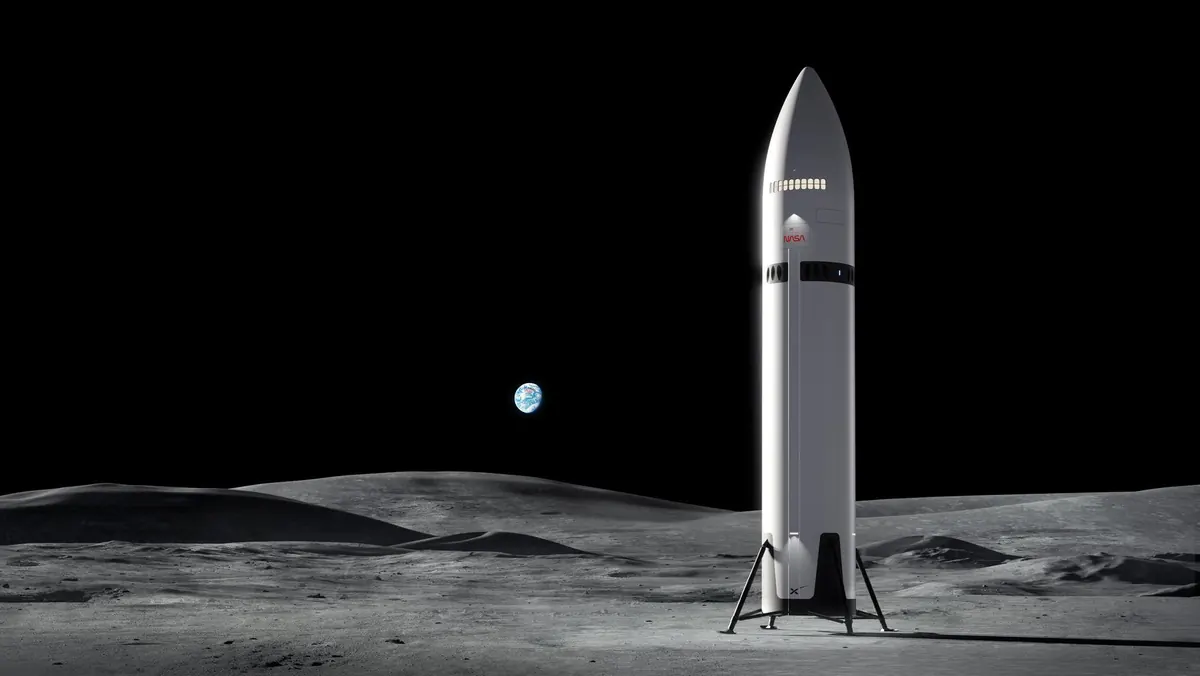
Image courtesy of NASA.

SpaceX / NASA

Human Landing System

Lunar surfacePhase C: Final Design and Fabrication39

Lunar lander variant of Starship for NASA's Artemis program. Optimized for crewed surface missions with on-orbit refueling. Target launch in early 2028.

Pressurized>600 m³27
HabitableTBD
GeneratedTBD
AvailableTBD
Recovery rateTBD
Allowance2.5 L reqt.12
Focus
Reusable, high-capacity lunar lander and temporary habitat enabling crewed surface exploration. Features massive pressurized volume and lunar-optimized systems.
Crew
Nominal 2–4 astronauts.
Airlocks
Dual airlocks, ~13 m³ each, for parallel operations.

Sources · 12 NASA OCHMO, 2023 · 27 SpaceX, 2026 · 39 Watson-Morgan et al., 2025

Foundation Surface Habitat: lunar surface concept image
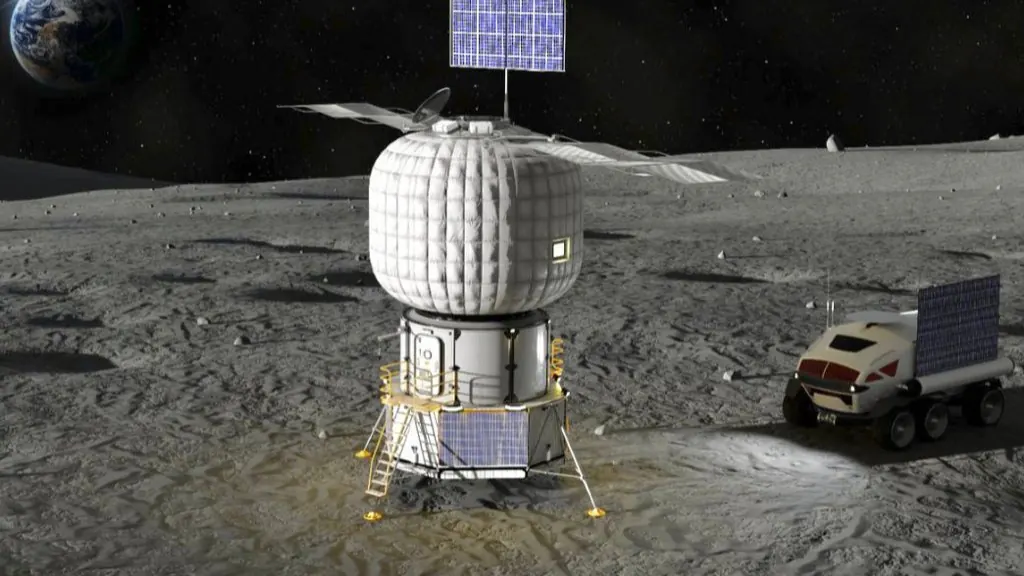
Image courtesy of NASA.

NASA

Foundation Surface Habitat

Lunar surfacePhase A: Concept Studies1

Fixed, pressurized surface habitat for NASA's Artemis Base Camp at the lunar South Pole. Target deployment in the early 2030s.

PressurizedTBD
Habitable127 m³1
Generated10–15 kW26
AvailableGrid-connected
Recovery rateTBD
AllowanceTBD
Focus
Primary living and working module enabling longer-duration surface stays, science operations, and serving as the anchor for Artemis Base Camp.
Crew
Supports 2 crew for 30-day missions initially; evolves to 4 crew for up to 60-day stays.
Architecture
Hybrid metallic base with airlock + inflatable upper volume that expands on the surface for a three-story layout.

Sources · 1 AmericaSpace, 2024 · 26 Schunk et al., 2022

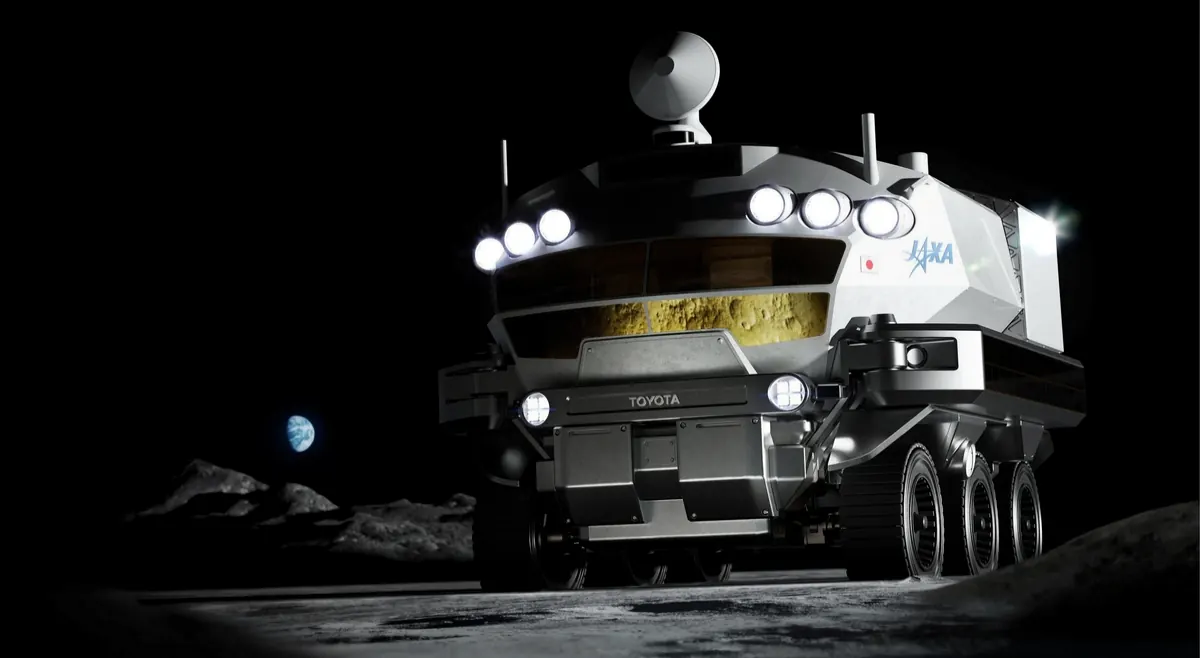
Lunar Cruiser: lunar surface concept image
Image courtesy of Toyota.

JAXA / Toyota

Lunar Cruiser

Lunar surfacePhase A: Concept and Technology Development19

Mobile pressurized lunar rover/habitat for the Artemis program. Target launch is no earlier than 2029.

Pressurized~13 m³7
Habitable~9 m³40
Generated~114 kW fuel cell31
Available10 kW stationary reqt.16
Recovery rateOpen-loop40
AllowanceTBD
Focus
Enables 10,000 km total cruising range (1,000 km per mission) surface exploration and pressurized habitability far from fixed lunar bases.
Crew
Living space for 2+ crew; up to 30–45 days of independent operations.
Mobility and power
High mobility with independent wheel drive and autonomous navigation, and regenerative fuel cell power capability for surviving lunar night.
Source notes
  • Generated power. The cited figure is the maximum output of Toyota's Mirai fuel-cell stack, used here as a reference point.
  • Water recovery. The source states there is no plan to collect and reuse water on board.

Sources · 7 Gough, 2019 · 16 NASA, 2023a · 19 NASA, 2025a · 31 Toyota Motor Corporation, 2014 · 40 Yamazaki et al., 2024

Method and definitions

How to read the numbers

These are developmental programs, so many figures are targets, not measurements. The definitions below keep the comparison consistent.

Habitable volume
The actual usable room where crew live and work, excluding structural gaps and equipment racks.
Pressurized volume
Airtight volume kept at Earth-like pressure so crew can live without spacesuits.
Generated power
Total electricity produced by the station's power systems (e.g., solar arrays).
Available power
Net electricity left for experiments and payloads after running basic station operations.
Water recovery rate
Percentage of wastewater successfully recycled into usable water.
Water allowance
The strict, budgeted mass of clean water provided daily per person for metabolic survival.
Open-loop
A life support system that consumes stored resources without recycling them.
Average (power)
Total energy used divided by time.
Continuous (power)
Delivered continuously without interruption.
Nominal
While operating normally and according to plan.
Inclination
The angle between an orbit's plane and Earth's equator.
Space habitat
A pressurized structure providing life support and protection for humans to live and work in space or on planetary surfaces.

About TBD. TBD means no public figure could be found in the sources cited, not that the habitat lacks the capability. Every metric that does have a value is tied to a numbered reference.

About the 2.5 L water allowance. Where a program has not published its own figure, the profile shows NASA's crew drinking-water requirement (NASA OCHMO, 2023) marked as a requirement, not as the program's design value.

About change. Technical capabilities evolve with engineering trade-offs, funding levels, and schedule changes. Each version of this comparison is dated; this one is v2.1, October 2026.

Abbreviations and acronyms
1/6g
One sixth of Earth gravity
AI
Artificial Intelligence
AxEMU
Axiom Extra Vehicular Mobility Unit
avg.
Average
BAS
Bharatiya Antariksh Station
cont.
Continuous
ECLSS
Environmental Control and Life Support
equiv.
Equivalent
Hab
Habitat
HALO
Habitation and Logistics Outpost
HLS
Human Landing System
I-Hab
International Habitation Module
kWe
Kilowatt Electric
kWp
Kilowatt Peak
Incln.
Inclination
ISRO
Indian Space Research Organisation
LEO
Low Earth Orbit
LIFE®
Large Integrated Flexible Environment
LVM3
Launch Vehicle Mark-3
nom.
Nominal
NRHO
Near Rectilinear Halo Orbit
PPE
Power and Propulsion Element
reqt.
Requirement
ROS
Russian Orbital Station
SE
Systems Engineering
TBD
To Be Determined

About

About this project and its author

The project

I prepared this as a personal exercise to synthesize complex data into a standardized format and allow for a cleaner comparison of how different platforms support human life.

If you have thoughts on how this project can be improved, please reach out on LinkedIn. I would especially welcome input from professionals with direct experience on these systems. This has been a valuable learning exercise for me, and I expect there is much more to learn.

This project focuses on developmental space habitats.

As with all developmental programs, technical capabilities continue to evolve due to ongoing engineering trade-offs, shifting funding levels, and frequent adjustments to timelines.

The author

Portrait of Matthew Freeman

Matthew Freeman

Systems and Data Analyst, Boeing · MS, Engineering Management · INCOSE CSEP

AIAA member: Space Settlement Technical Committee

Matthew is a U.S. Air Force veteran (METNAV) and a Systems and Data Analyst at Boeing, where he owns day-to-day operations for defense technical-authoring platforms: deployments, incident response, and disaster recovery with engineers, plus access control. He previously served as a GS-12 Telemedicine Program Manager at the Veterans Health Administration, standing up clinic programs and supervising a mostly remote team of about ten while maintaining Conditions of Participation. He built this site as an independent, personal project to standardize public data on space habitats. The site is independent and not affiliated with or endorsed by Boeing, the U.S. Air Force, the VA, or AIAA; the views expressed are his own.

Sources

References

41 public sources in APA style, listed alphabetically. Superscript numbers throughout the page point here.

  1. AmericaSpace. (2024, January 13). Living on the Moon: Inside Artemis' Foundation Habitat. https://www.americaspace.com/2024/01/13/living-on-the-moon-inside-artemis-foundation-habitat/Used for: Foundation
  2. Axiom Space. (n.d.). Axiom Station. Axiom Space. https://www.axiomspace.com/axiom-stationUsed for: Axiom Station
  3. Dittmar, M. L., Maender, C., Stoudemire, J., Aspiotis, J., Clemens, R., Gupta, A., Panchanathan, D., Zuniga, D., McLamb, W., Peeples, L., & Lefaive, E. (2021). Beyond the ISS: Support for research campaigns on Axiom Station. National Academies of Sciences, Engineering, and Medicine Decadal Survey on Biological and Physical Sciences Research in Space 2022-2032 (White Paper). https://science.nasa.gov/wp-content/uploads/2023/05/146_cbe5e7d9dc14eda82ab814379409450e_DittmarMaryLynne.pdfUsed for: Axiom Station
  4. European Space Agency. (2017). ESA workshop: Research opportunities on the Deep Space Gateway (Issue 1.1). https://sci.esa.int/documents/34161/35992/1567260322981-Deep_Space_Gateway_Research_Call_Issue_1p1_release.pdfAlso consulted
  5. Exterra Journal of Space Commerce. (2026, January 26). Inside Orbital Reef. The Journal of Space Commerce. https://www.exterrajsc.com/p/inside-orbital-reefUsed for: Orbital Reef
  6. Foust, J. (2024, October 13). Vast releases design of Haven-2 commercial space station. SpaceNews. https://spacenews.com/vast-releases-design-of-haven-2-commercial-space-station/Used for: Haven-2
  7. Gough, E. (2019, July 24). Toyota is building a pressurized lunar rover for Japan. Universe Today. https://www.universetoday.com/articles/toyota-is-building-a-pressurized-lunar-rover-for-japanUsed for: Lunar Cruiser
  8. Kehr, J. J. (2024). The international Starlab commercial space station concept. Journal of Space Operations & Communicator. https://www.opsjournal.org/DocumentLibrary/Uploads/final_The%20International%20STARLAB%20Space%20Station%20Concept%20(Autosaved).pdfUsed for: Starlab
  9. Luzin, P. (2024, November 7). The dubious future of Russia's proposed orbital station. Eurasia Daily Monitor, 21(105). Jamestown Foundation. https://jamestown.org/the-dubious-future-of-russias-proposed-orbital-station/Used for: ROS
  10. Max Space. (2025, December 17). Max Space disrupts LEO, Moon and Mars habitats with its radically unique Thunderbird Station [Press release]. https://cdn.prod.website-files.com/690226e2c345fbfaa3d9b197/694a71f9cf17e04109f0b89a_Max%20Space%20Announces%20Thunderbird%20Station%20251217%20v2.pdfUsed for: Thunderbird
  11. Mosher, T. J., & Kelsey, L. (2024). Orbital Reef and commercial low Earth orbit destinations—upcoming space research opportunities. npj Microgravity, 10(35).Used for: Orbital Reef
  12. NASA Office of the Chief Health and Medical Officer. (2023). Water – Human consumption (OCHMO-TB-027 Rev. C). https://www.nasa.gov/wp-content/uploads/2023/12/ochmo-tb-027-water.pdfUsed for: Orbital Reef, Haven-2, Starlab, Axiom Station, Gateway, HLS
  13. NASA. (n.d.). Gateway: Frequently Asked Questions. https://www.nasa.gov/gateway-frequently-asked-questions/#general-gateway-questionsAlso consulted
  14. National Aeronautics and Space Administration. (2018, March 7). External payload interfaces [Presentation]. NASA Explorers Program. https://explorers.larc.nasa.gov/2019APSMEX/SMEX/pdf_files/Gateway%20PL%20IF%202019-04-19.pdfUsed for: Gateway
  15. National Aeronautics and Space Administration. (2022, December 15). A powerhouse in deep space: Gateway's power and propulsion element. https://www.nasa.gov/missions/artemis/gateway/a-powerhouse-in-deep-space-gateways-power-and-propulsion-element/Used for: Gateway
  16. National Aeronautics and Space Administration. (2023a). Mars surface power generation challenges and considerations. https://www.nasa.gov/wp-content/uploads/2024/01/mars-surface-power-generation-challenges-and-considerations.pdfUsed for: Lunar Cruiser
  17. National Aeronautics and Space Administration. (2023b). NASA achieves water recovery milestone on International Space Station. https://www.nasa.gov/missions/station/iss-research/nasa-achieves-water-recovery-milestone-on-international-space-station/Used for: Gateway
  18. National Aeronautics and Space Administration. (2024, July 16). International Space Station facts and figures. https://www.nasa.gov/international-space-station/space-station-facts-and-figures/Used for: Axiom Station
  19. National Aeronautics and Space Administration. (2025a). FY 2026 president's budget request technical supplement. https://www.nasa.gov/wp-content/uploads/2025/05/fy-2026-budget-technical-supplement-002.pdfUsed for: Lunar Cruiser
  20. National Aeronautics and Space Administration. (2025b). Gateway capabilities. https://www.nasa.gov/gateway-capabilities/Also consulted
  21. National Aeronautics and Space Administration. (2026, March 9). Commercial Low Earth Orbit (LEO) Destination Contract (CLDC). https://www.nasa.gov/johnson/jsc-procurement/cldc/Used for: Haven-2
  22. Press Information Bureau. (2026, March 25). Parliament question: The advantages and benefits of Bharatiya Antriksh Station. Department of Space, Government of India. https://www.pib.gov.in/PressReleasePage.aspx?PRID=2244978Used for: BAS
  23. Rabie, P. (2025, December 21). Proposed space station could be deployed in a single launch. Gizmodo. https://gizmodo.com/proposed-space-station-could-be-deployed-in-a-single-launch-2000701443Used for: Thunderbird
  24. Roman, M. C. (2023). Commercial low-Earth orbit destination (CLD) capabilities of interest and resource needs (NASA White Paper No. 20230003013). National Aeronautics and Space Administration. https://ntrs.nasa.gov/citations/20230003013Used for: Axiom Station
  25. satsearch. (2025, January 6). Axiom Station. https://satsearch.co/products/axiomspace-axiom-stationUsed for: Axiom Station
  26. Schunk, R. G., Babiak, S. D., & Evans, B. W. (2022). Thermal control system architecture and technology challenges for a lunar surface habitat. NASA Technical Reports Server. https://ntrs.nasa.gov/citations/20210026557Used for: Foundation
  27. SpaceX. (2026, May 12). Updates. https://www.spacex.com/updatesUsed for: HLS
  28. Starlab Space LLC. (n.d.). Starlab Payload Handbook. https://starlab-space.com/wp-content/uploads/Starlab-Payload-Handbook-Main-file-.pdfUsed for: Starlab
  29. Starlab Space. (2026, February 23). Starlab completes NASA commercial critical design review [Press release]. https://starlab-space.com/press-releases/starlab-completes-nasa-commercial-critical-design-review/Used for: Starlab
  30. Starlab Space. (n.d.). Announcing two Starlab demo missions. https://starlab-space.com/insights/announcing-two-starlab-demo-missions/Used for: Starlab
  31. Toyota Motor Corporation. (2014, November 18). Toyota ushers in the future with launch of 'Mirai' fuel cell sedan. Toyota Global Newsroom. https://global.toyota/en/newsroom/toyota/22740159.htmlUsed for: Lunar Cruiser
  32. Vast Space. (2024, October 14). Vast announces Haven-2, its proposed space station designed to succeed the International Space Station (ISS). https://www.vastspace.com/updates/vast-announces-haven-2-its-proposed-space-station-designed-to-succeed-the-international-space-station-issAlso consulted
  33. Vast Space. (n.d.-c). Haven-2. https://www.vastspace.comUsed for: Haven-2
  34. Vast Space. (n.d.-d). Roadmap. https://www.vastspace.com/roadmapUsed for: Haven-1
  35. Vast. (2026, January 20). Vast advances Haven-1 into integration phase. https://www.vastspace.com/updates/vast-advances-haven-1-into-integration-phaseUsed for: Haven-1
  36. Vast. (n.d.-a). Haven-1. https://www.vastspace.com/haven-1Used for: Haven-1
  37. Vast. (n.d.-b). Haven-1 Lab. https://www.vastspace.com/haven-1-labUsed for: Haven-1
  38. Wall, M. (2026, May 5). NASA's Lunar Gateway space station is out, moon bases are in. Space.com. https://www.space.com/space-exploration/artemis/nasas-lunar-gateway-space-station-is-out-moon-bases-are-inUsed for: Gateway
  39. Watson-Morgan, L., Chojnacki, K., Kiker, L., & Perry, B. (2025). A pathway to the Moon: Marshall Space Flight Center's Human Landing Systems. IEEE Aerospace Conference, Big Sky, MT, United States. https://ntrs.nasa.gov/api/citations/20240012719/downloads/HLS%20Update%20Kent%20Chojnacki%20IEEE%20Aero%202025%20v2.pdfUsed for: HLS
  40. Yamazaki, C., Ikeda, N., Kamiyoshi, S., Wada, M., Menjo, R., Matsumoto, H., Takeda, J., Kimura, N., Ushioda, Y., Morinaka, M., Komura, T., Matsuda, K., & Ohmura, Y. (2024, July 21–25). Overview of JAXA pressurized rover development and ECLSS design [Paper presentation]. 53rd International Conference on Environmental Systems, Louisville, KY, United States. https://ttu-ir.tdl.org/server/api/core/bitstreams/ec09dcf6-c7c3-4374-905c-c4397ee67e3f/contentUsed for: Lunar Cruiser
  41. Zak, A. (2026, April 9). Russian Orbital Station, ROS. RussianSpaceWeb.com. https://www.russianspaceweb.com/ros.htmlUsed for: ROS